Teardown · No. 02 · 30 Sept 2026
One color per feature
Changing the background on every frame, and the case for not changing it at all.
A screenshot set is read as a sequence, but it is scanned as a row. Color is the quickest way to tell a viewer that each frame is a new idea, and the quickest way to make ten frames look like one set.
Timery and Bear change color on every frame, for different reasons. Things keeps one blue from start to finish and changes something else instead.
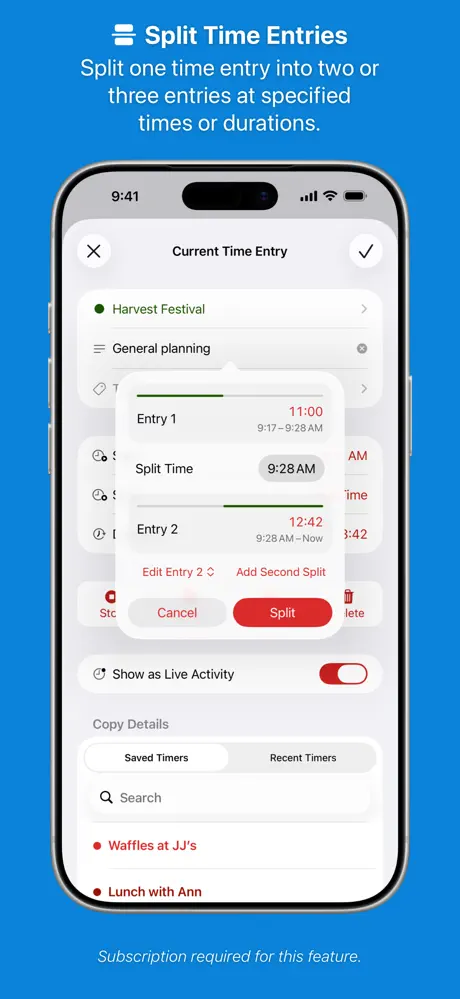
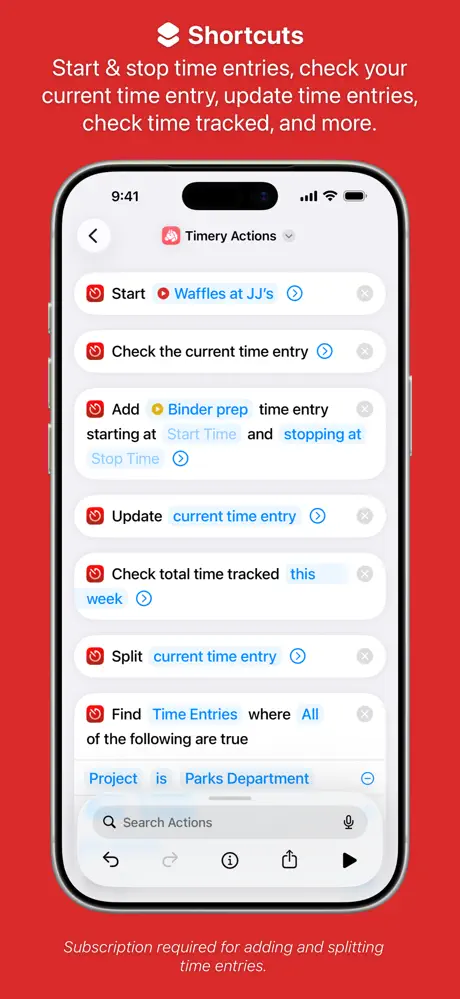
Timery: the rainbow as an index
Timery’s ten frames run through the spectrum in order: red, orange, yellow, green, blue, then indigo, purple, magenta, pink and back to red. The phone never moves. Each frame has the same small symbol, a title in white and two lines of description, and a quiet footnote where a feature needs a subscription.
Because layout and phone position are fixed, the color carries all the change. You can scroll the row and know you have moved on without reading a word, and the first three frames in search results already show that the set is a sequence.
 All 10 frames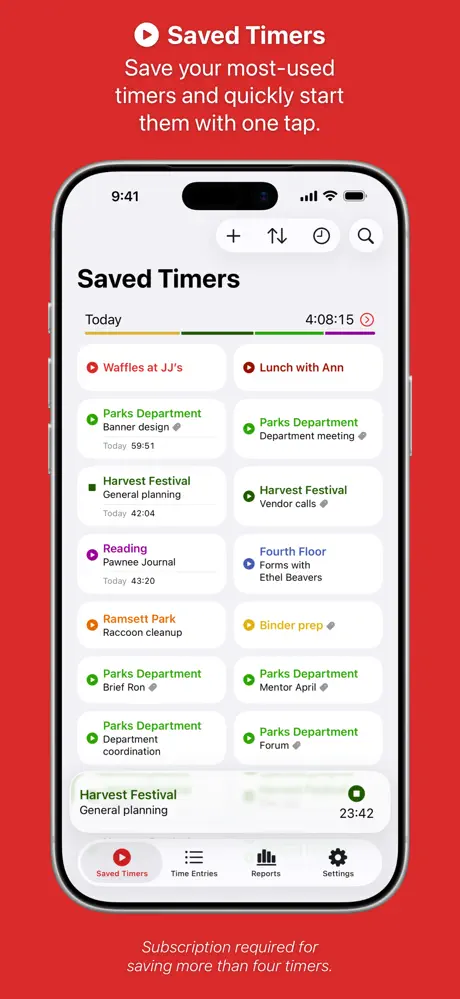
Bear: color plus a character
Bear also changes color every frame, from red to purple, pale blue, teal and yellow and on through green, pink and blue. But it varies the composition too: a full phone, a sidebar crop, and two frames with no phone at all, just the polar bear juggling devices or painting theme swatches.
In the last three frames the bears climb onto the top of the phone and peer over the edge. Each headline puts one word in a different color or style (“beautiful”, “#tags”, “far”), which ties the lettering to the illustration. The color says “new feature”; the bear says “same app”.
 All 8 frames


Things: one blue, and one dark frame
Things uses a single blue for all eight frames, the same phone position and the same headline pattern: a bold lead phrase followed by a regular sentence (“Meet Things. The award-winning to-do app…”). Nothing competes with the interface, which is the product’s real argument.
Change comes from the content instead. Frame seven switches the interface to dark mode, the only real color shift in the set, and frame eight splits into two stacked crops, a lock screen and a home screen with widgets. Consistency makes those two moments stand out.
 All 8 frames

